
We often think about conversion as a single moment.
Someone sees the product.
They understand the value.
They decide.
Buy.
Sign.
Book.
Commit.
But most decisions don't actually happen that way.
Before someone makes a big decision, there are usually smaller decisions happening underneath it.
Do I want to know more?
Does this seem relevant to me?
Can I trust these people?
Is it worth my time?
Maybe I'll try it.
And sometimes, that small decision is what makes the bigger one possible.
The problem with asking too much, too soon
Think about the difference between these two requests:
"Book a demo."
and
"See how it works."
They may lead to the same place eventually.
But they don't ask the customer for the same level of commitment.
The first asks for time, attention and a decision.
The second simply asks for curiosity.
That's an important distinction.
Because when the perceived commitment is low, resistance tends to be lower too.
Small commitments change the relationship
There is a psychological pattern known as the foot-in-the-door effect.
The basic idea is simple:
When people agree to a small request, they become more likely to agree to a larger request later.
Not because they have been tricked.
But because people tend to behave consistently with the decisions they have already made.
If I have already spent time exploring something, perhaps I am more willing to take the next step.
If I have already tried the product, perhaps signing up feels less like a leap.
If I have already shared what I need, perhaps a conversation feels more natural.
The first step changes the context of the second.
This matters in marketing
We sometimes design journeys as if the customer has already decided.
We take them from:
See ad → Buy.
Or:
Visit website → Book meeting.
Or:
Download report → Become customer.
But customers don't necessarily move at our preferred speed.
There may be several questions between awareness and action.
And if we ignore those questions, we can end up asking for commitment before we've earned enough interest.
The first step doesn't have to sell everything
A good first step can simply reduce uncertainty.
It could be:
Reading something useful.
Trying a tool.
Watching how the product works.
Answering a simple question.
Comparing options.
Seeing a real example.
Getting a useful insight.
None of these needs to close the sale.
Their job may simply be to make the next step feel easier.
That is a very different way of thinking about conversion.

But smaller doesn't mean meaningless
There is a danger here too.
Breaking a journey into smaller steps doesn't mean creating pointless forms, endless pop-ups, or asking people to click five times before they can do anything.
The smaller step still needs to have value.
If you ask for someone's email, give them something worth receiving.
If you ask them to try a tool, make the tool useful.
If you ask them to answer a question, use the answer to improve their experience.
A small commitment works better when the customer feels they got something back.
Think about the journey, not just the conversion
The useful question isn't:
"How do we get people to buy?"
It might be:
"What is the smallest meaningful decision we can help them make first?"
That question changes the journey.
Instead of pushing the customer toward the finish line, you start designing the path.
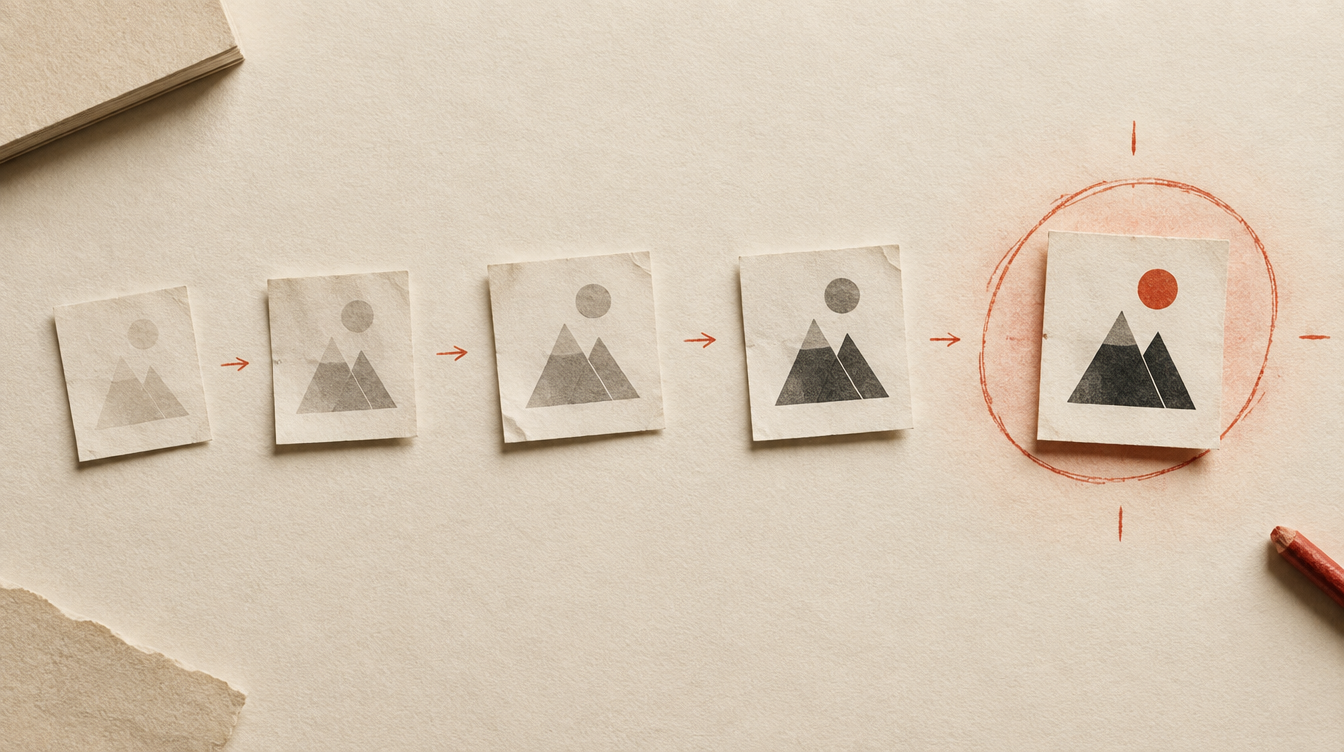
Maybe the first goal isn't the sale.
Maybe it's curiosity.
Then understanding.
Then trust.
Then trial.
Then commitment.
The exact sequence will change from business to business.
But the principle remains:
Don't always ask for the biggest decision at the beginning.
Sometimes, the best way to get someone to take the next big step is to give them a smaller one worth taking.