We like to believe that people make decisions by comparing options, weighing benefits, and choosing what makes the most sense.
In reality, the way a choice is presented can change the choice itself.
More choice does not always make people feel more confident. Sometimes, it makes the decision feel like work.
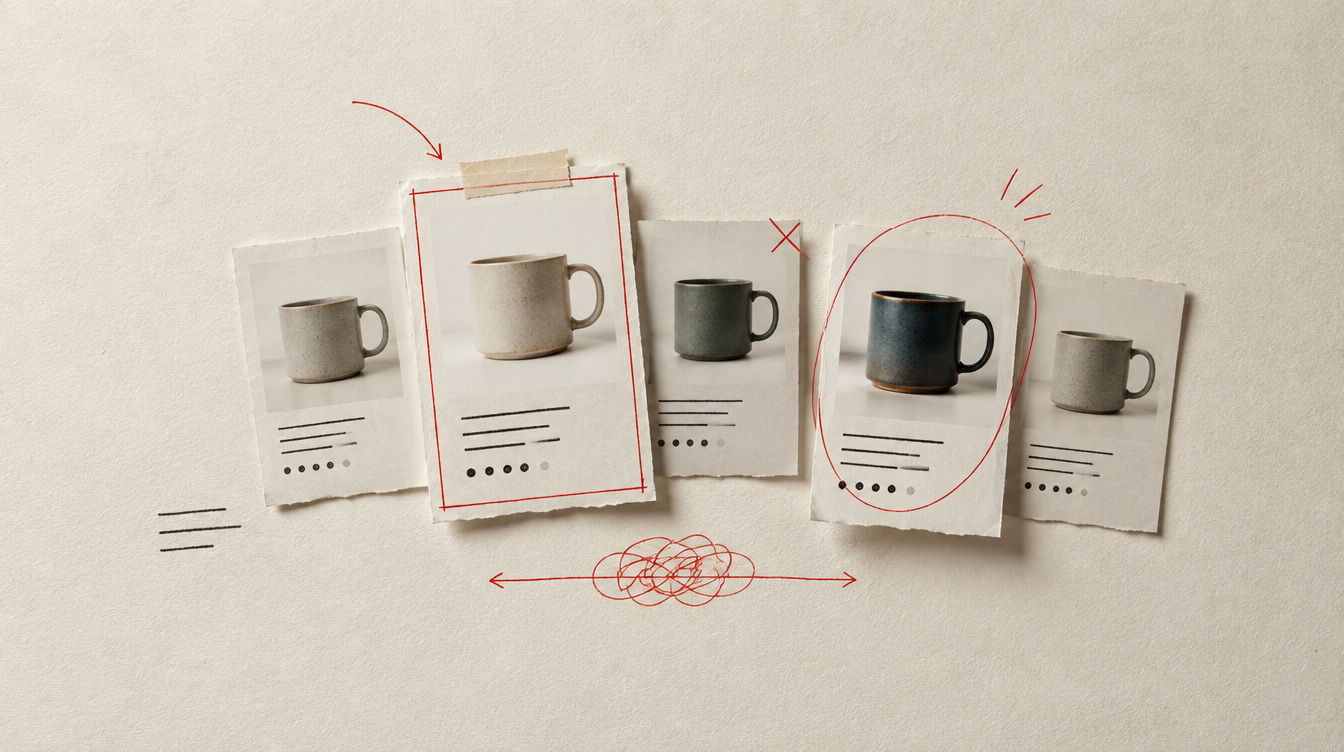
Think about the last time you had too many similar options in front of you. Different plans. Different prices. Different features. Nothing obviously wrong with any of them.
The problem was not that you had no choice.
The problem was that you had too much of it.
This is where decision-making becomes interesting for marketers.
People do not experience a decision as a spreadsheet.
They experience it as uncertainty, risk, effort, and sometimes fear of making the wrong choice.
And small changes in how options are presented can change what feels like the “right” decision.
Take anchoring.
The first number, option, or reference point we see can influence how we judge everything that comes after it.
A price can feel expensive or reasonable depending on what we saw before it.
The same product can feel completely different when it is placed next to a more expensive alternative.
Then there is the decoy effect.
Sometimes a third option exists not because anyone expects people to choose it, but because it makes another option look more attractive.
A premium option can suddenly feel like the smarter choice when there is a slightly inferior alternative sitting next to it.
Nothing about the premium option changed.
The comparison did.
And then there is loss aversion.
People do not only ask:
“What will I gain?”
They also ask:
“What could I lose?”
The possibility of making the wrong decision can sometimes be more powerful than the potential benefit of making the right one.
This changes the marketing question.
Instead of asking:
“How do we convince people to buy?”
Sometimes the better question is:
“What makes the decision difficult in the first place?”
Maybe there are too many options.
Maybe the comparison is unclear.
Maybe the customer does not understand what makes one option meaningfully different.
Maybe the perceived risk is higher than the perceived benefit.
Maybe we have designed the product around what the business wants to communicate rather than how the customer actually makes the decision.
Good marketing does not only make an option attractive.
It can also make the decision easier.
That might mean reducing unnecessary choices.
It might mean designing a clearer comparison.
It might mean establishing a useful reference point.
Or it might simply mean understanding what the customer is afraid of losing.
Because sometimes the problem is not persuasion.
The problem is decision friction.
And if we can remove some of that friction, we may not need to persuade nearly as hard.
When a customer doesn't buy, are we sure the problem is persuasion — or could it be the decision itself?