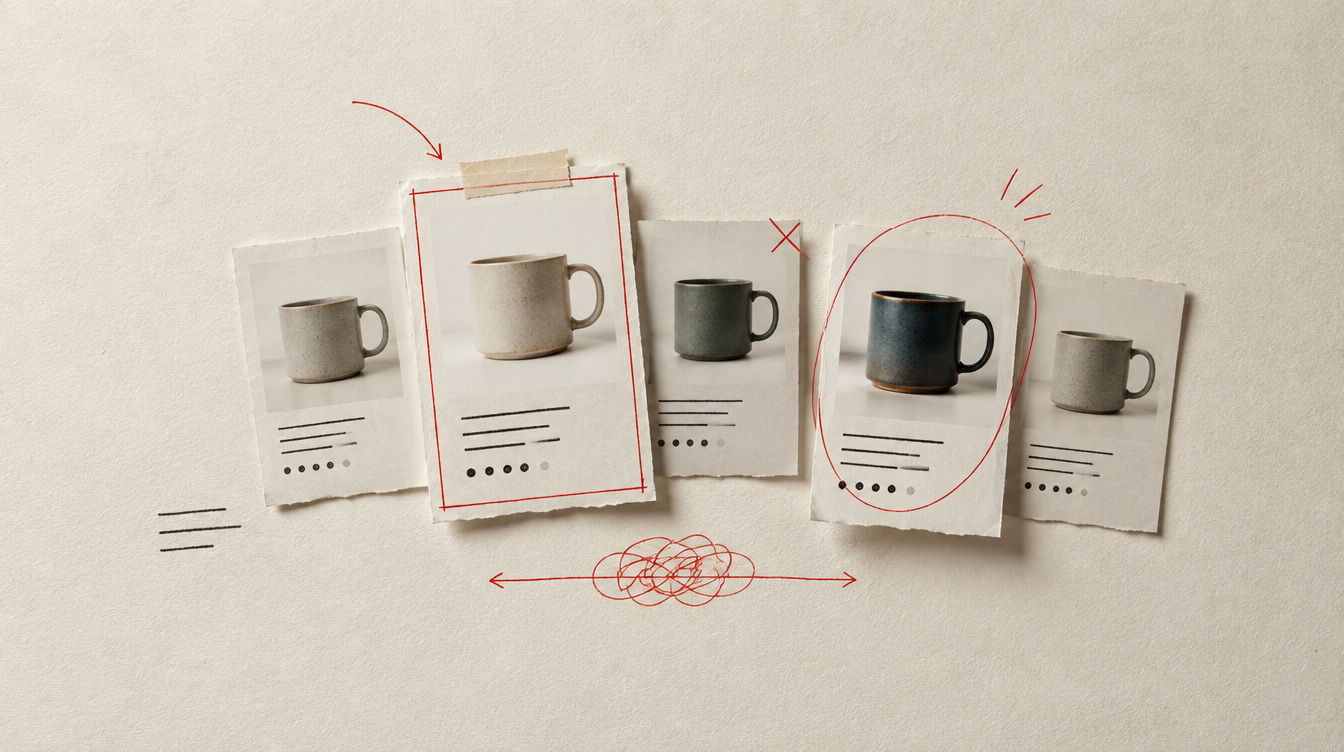

Sometimes the strongest argument for a product is simply that other people already chose it.
Walk into a busy restaurant and an empty one next door.
Even without knowing anything about the food, the busy restaurant often feels like the safer choice.
Why?
Because other people's choices give us information.
When we are uncertain, we look for signals.
Reviews.
Ratings.
Testimonials.
Customer counts.
“Best seller.”
“Most popular.”
The number of people already using something.
These signals reduce uncertainty.
They tell us, at least indirectly:
“Other people have tried this before you.”
This is social proof.
And it works because we are not always trying to make the perfect decision.
Sometimes we are simply trying to avoid making a bad one.
The crowd becomes a shortcut.
If many people chose it, maybe there is a reason.
But there is an important distinction here.
A crowd is not proof.
It is a signal.
A product being popular does not automatically mean it is good.
But popularity can make us more willing to investigate, consider, and eventually choose it.
This is why strong social proof is not simply about saying:
“10,000 customers already use us.”
The stronger question is:
“Why did those customers choose us?”
What problem were they solving?
What did they value?
What changed for them?
The number creates attention.
The reason creates trust.
That is where proof becomes persuasion.
And where persuasion becomes trust.