Marketing has always been shaped by the tools available to it.
New media changed how brands reached audiences. Digital platforms changed how they measured attention. Data made targeting more precise. Automation made it possible to deliver messages at a scale that once seemed impossible.
Now AI is accelerating that transformation.
Brands can generate content faster, personalize messages, respond to customers automatically, and create experiences that adapt to individual behavior.
The possibilities are significant. But there is a question worth asking before we celebrate how much more marketing can do:
As marketing becomes more automated, are we getting better at understanding people—or simply getting better at reaching them?
Those are two very different kinds of progress.
Personalization is not the same as relevance
A message can mention your name, reflect your browsing history, and recommend a product based on your previous behavior. It can be technically personalized and still feel completely irrelevant.
Why?
Because personalization describes how closely a message is tailored to an individual. Relevance describes whether that message matters to them in the first place.
A brand may know what someone clicked, searched for, or purchased. But those actions do not always explain what the person is trying to achieve, what they are worried about, or what would genuinely help them.
Data reveals patterns. Understanding requires interpretation.
Without that distinction, AI can make marketing feel more intrusive rather than more helpful. It can deliver the right product at the wrong moment, repeat a message the customer has already ignored, or mistake a temporary behavior for a lasting preference.
The technology may be doing exactly what it was designed to do.
The problem is that the objective was too narrow.

More messages can create less meaning
When producing content becomes easier, the temptation is to produce more of it.
More emails. More notifications. More variations of the same campaign. More automated follow-ups. More content tailored to increasingly specific audience segments.
Each message may be inexpensive to produce. But the customer's attention is not free.
Every interaction asks for a little time, a little consideration, and sometimes a little trust. When those interactions do not provide enough value in return, the relationship begins to weaken.
The brand becomes more present without becoming more meaningful.
This is one of the risks of optimizing marketing around what the organization can produce rather than what the customer actually needs.
AI can reduce the cost of sending another message. It cannot make that message worth receiving.
Efficiency should remove friction, not judgment
Automation is valuable when it removes unnecessary effort.
It can help customers find answers faster, simplify routine transactions, provide support outside normal business hours, and help teams respond more consistently.
But not every interaction should be treated as a task to complete as quickly as possible.
Some customer situations require context. Some decisions involve uncertainty. Some complaints need empathy before they need a solution. And some moments are important precisely because a person is willing to listen, understand, and take responsibility.
A system that automates a process without understanding its purpose may remove the very thing that made the experience valuable.
The question is not whether an interaction can be automated.
It is whether automating it improves the experience.
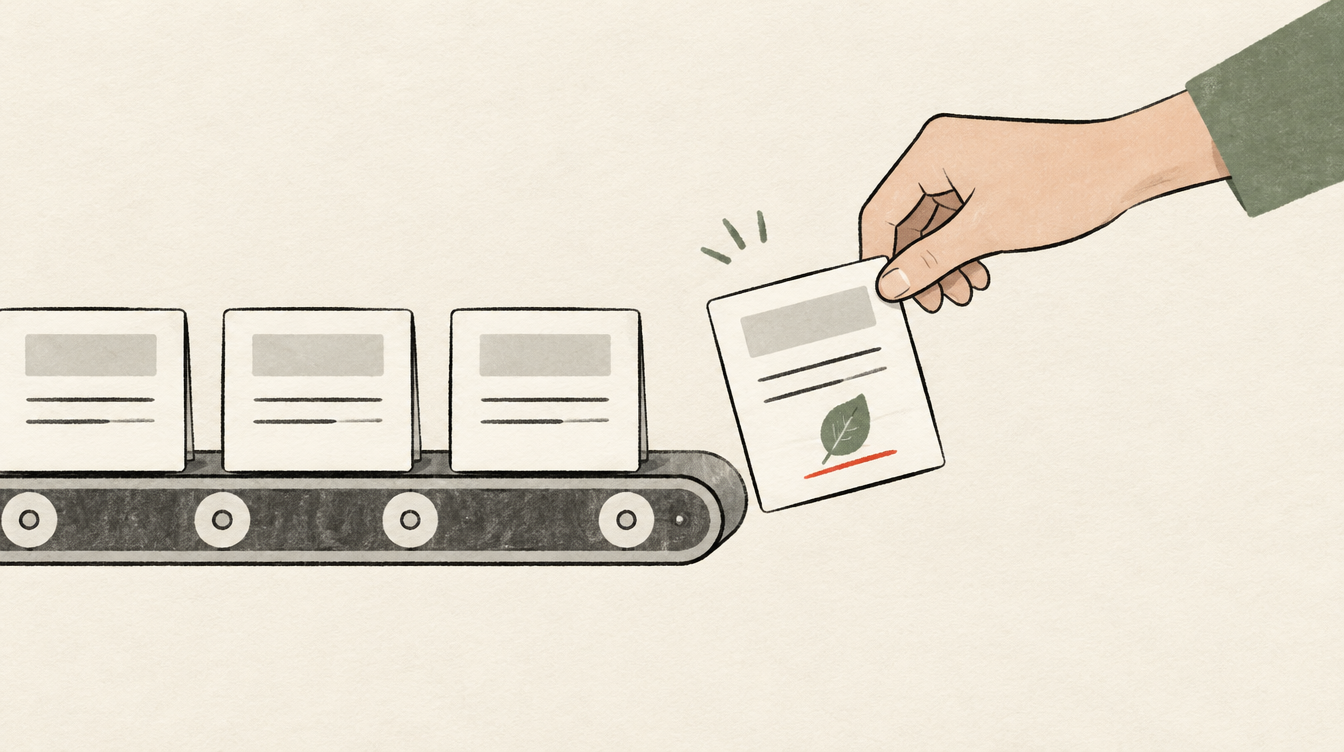
Sometimes the best use of AI is to eliminate repetitive work so people have more time for the conversations that require human judgment.
The role of marketers is changing
As AI makes execution faster, marketers may spend less time producing individual assets and more time deciding what deserves to be produced.
That shift makes several capabilities more important, not less.
Understanding customer motivations. Defining a clear brand point of view. Recognizing when a message is inappropriate. Distinguishing useful personalization from unnecessary intrusion. Knowing when a campaign should not be sent at all.
These are not simply production tasks. They require context, judgment, and an understanding of how people interpret what a brand does.
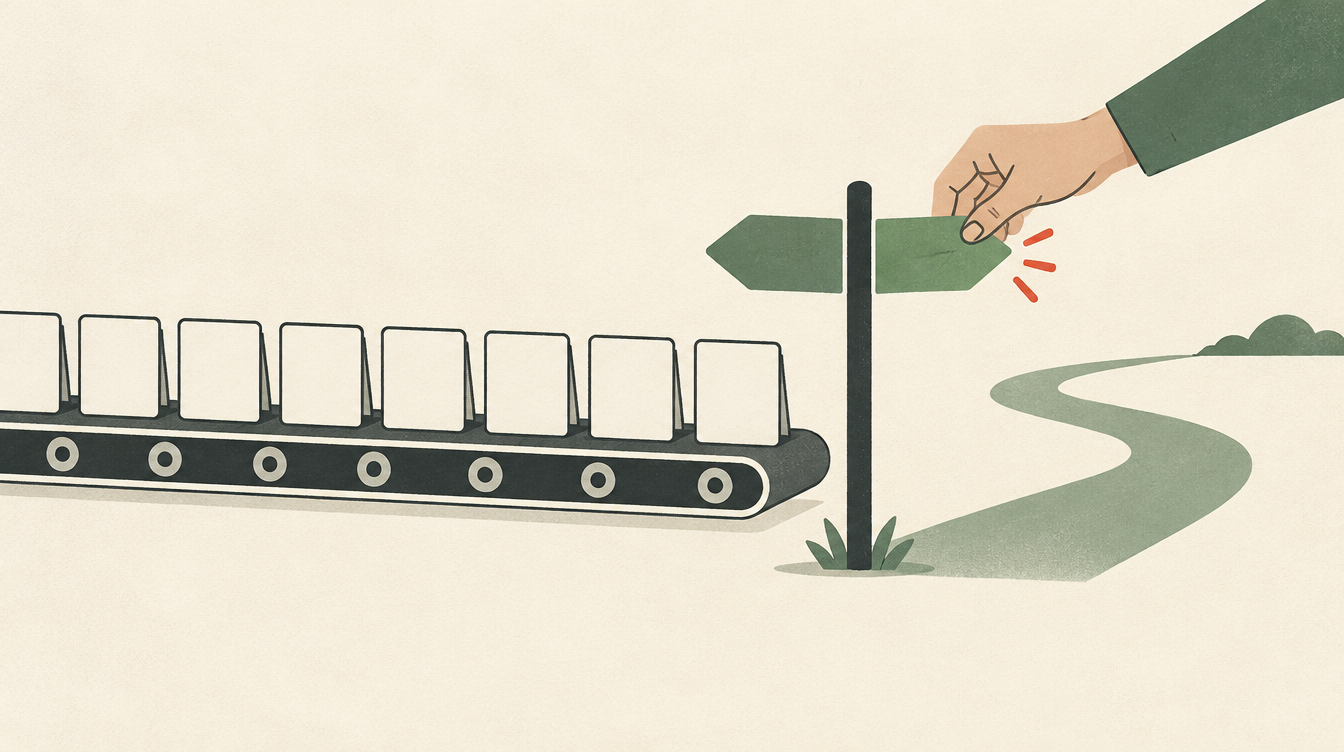
The marketer's value is not measured only by how much content they can create. It also lies in deciding which message matters, which audience deserves attention, and which interaction should never happen.
When production becomes abundant, good judgment becomes a stronger differentiator.
Build around the person, not the automation
The most useful question for any AI-powered marketing initiative is not simply, “What can we automate?”
It is, “What would make this experience genuinely better for the person on the other side?”
That question changes how success is defined.
Instead of measuring only the number of messages sent, consider whether customers find the communication useful. Instead of celebrating personalization alone, examine whether recommendations help people make better decisions. Instead of automating every follow-up, understand when another message adds value and when silence is the better choice.
These measures are harder to optimize than output volume. But they are closer to the reason marketing exists in the first place.
Technology should help a brand understand people better, serve them more effectively, and make interactions more valuable.
It should not become an excuse to replace understanding with prediction, or relationships with a sequence of automated touchpoints.
AI will continue to make marketing faster, more scalable, and more sophisticated.
The brands that benefit most may not be the ones that automate the most interactions. They may be the ones that understand which interactions deserve to exist.
The future of marketing is not simply about reaching more people. It is about making every interaction worth their attention.