It is difficult to talk about business today without talking about AI.
Marketing teams are using it to generate content, analyze audiences, personalize campaigns, and automate repetitive tasks. Product teams are building AI-powered features. Leadership teams are exploring how to integrate it into their operations.
The pressure to adopt AI is real. Nobody wants to be left behind.
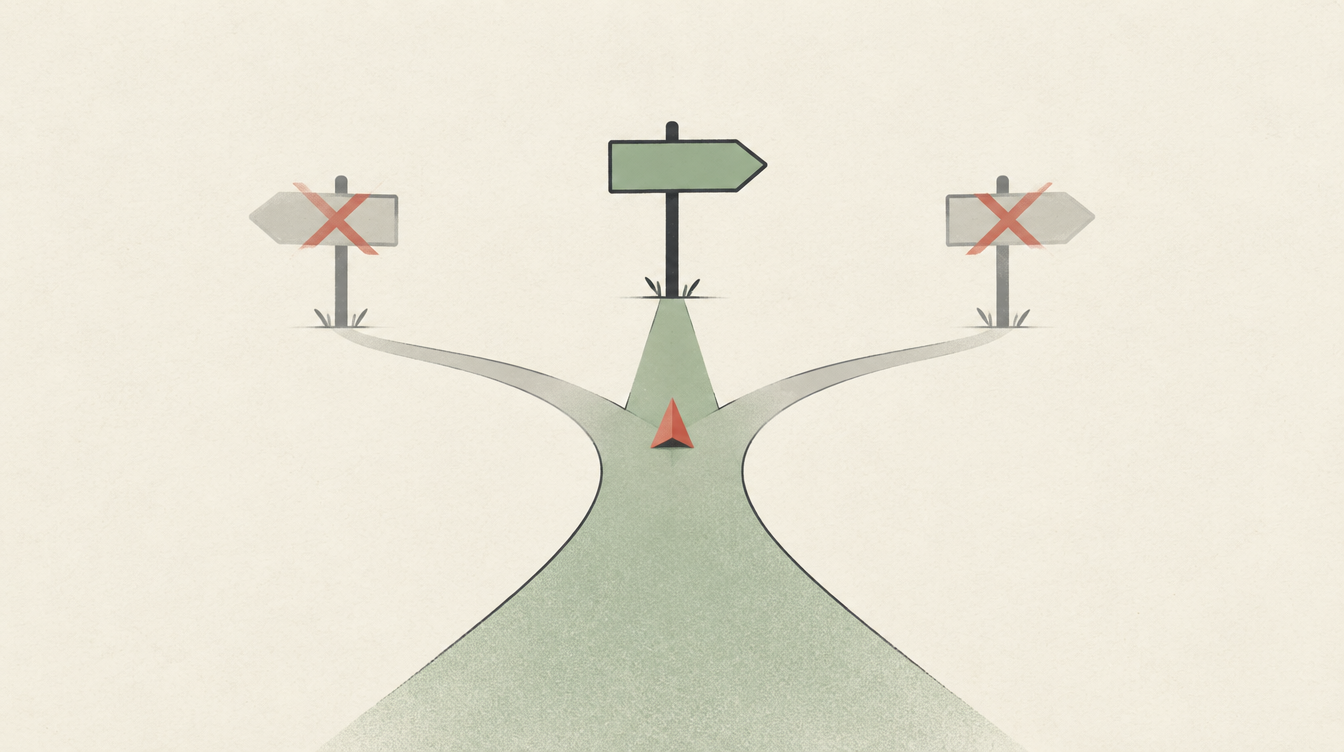
But somewhere between the excitement of what AI can do and the pressure to use it, an important question often gets overlooked:
What problem are we actually trying to solve?
Because adopting a new technology and improving a business are not the same thing.
Faster does not automatically mean better
Imagine a marketing team that struggles to communicate its value proposition clearly.
It introduces AI tools and begins producing more content, more quickly. The team publishes more posts, creates more campaign variations, and generates more ideas than ever before.
The output increases. The workflow becomes faster. The team appears more productive.
But if the positioning is still unclear, the messaging is still inconsistent, and the audience is still poorly understood, what has really improved?
The business may now be communicating the wrong message more efficiently.
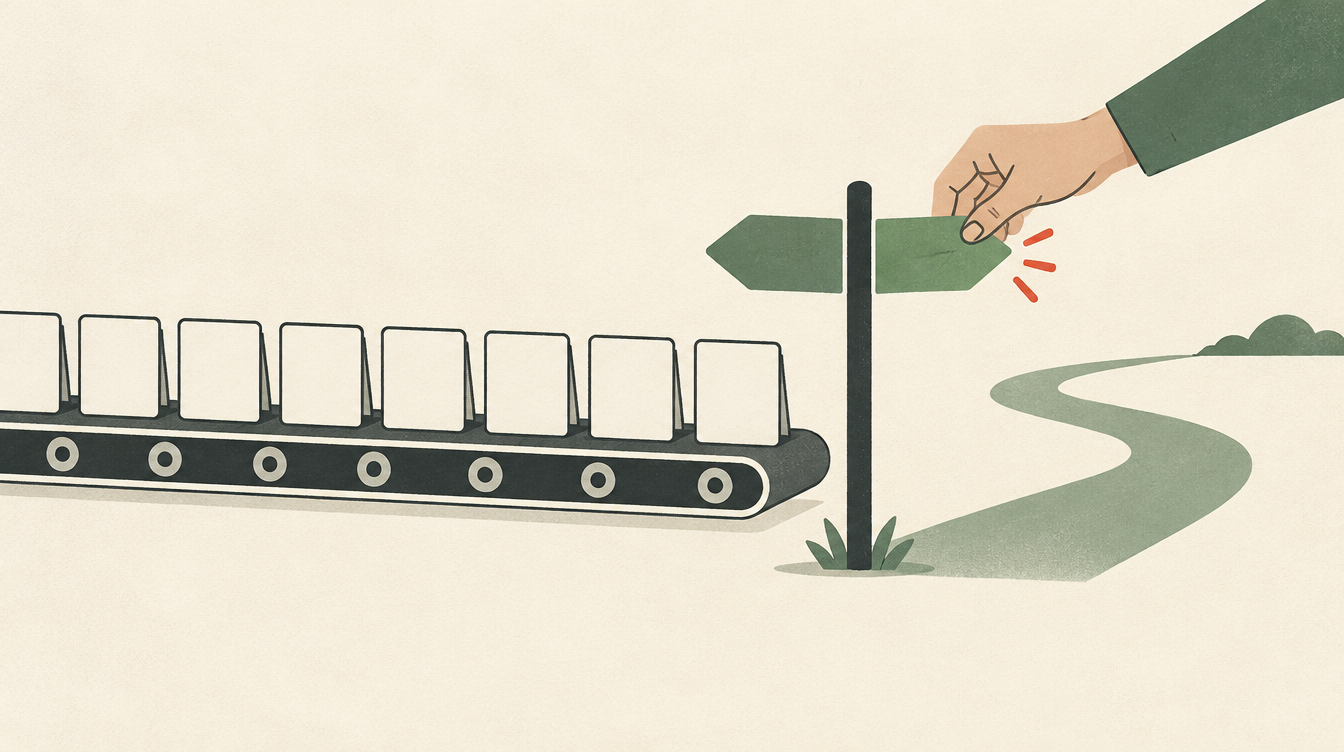
This is the difference between improving execution and improving direction.
AI can accelerate a process. It cannot guarantee that the process is worth accelerating.
And when the underlying problem is strategic, adding more technology may only make the problem harder to see.
AI amplifies the thinking behind it
AI is often discussed in terms of what it can produce: text, images, insights, recommendations, predictions, and decisions.
But its value depends heavily on the questions we ask, the context we provide, the information we trust, and the judgment we apply to its output.
Give it a clear objective, relevant context, and a well-defined problem, and it can become a powerful advantage.
Give it a vague brief, conflicting priorities, or a weak understanding of the customer, and the result may be polished, fast, and fundamentally unhelpful.
The output can look impressive without moving the business forward.
This is why AI adoption is not simply a technology decision. It is also a test of how clearly an organization thinks about its customers, its objectives, and the work that matters most.
The technology may expose weaknesses that were already there.

Start with the problem, not the tool
When businesses explore AI, the conversation often begins with the technology.
Which model should we use? Which platform offers the best features? What can we automate? Where can we introduce AI?
These are useful questions—but they come too early if the problem has not been defined.
A better starting point is to examine the work itself.
Where are customers experiencing friction? Which decisions take too long? What repetitive work consumes valuable time without creating much value? Where are people making avoidable mistakes? What information do teams need but cannot access easily?
Once the problem is clear, the role of AI becomes easier to evaluate.
Sometimes AI is the right answer. Sometimes a better process, clearer ownership, improved data, or a simpler customer experience will create more value.
The goal is not to use AI everywhere.
The goal is to improve the business, and use AI where it meaningfully helps.
More output is not the same as more value
One of AI’s most attractive promises is the ability to increase output with less effort.
That can be useful. But output is only valuable when it contributes to an outcome that matters.
More content does not automatically create stronger brand meaning. More leads do not automatically produce better customers. More product features do not automatically improve the customer experience. More automation does not automatically create a better service.
When organizations focus only on how much AI helps them produce, they risk optimizing the easiest part of the equation.
The harder question is whether that output changes anything important.
Does it help customers make better decisions? Does it reduce meaningful friction? Does it improve the quality of a decision? Does it create a better experience, a stronger relationship, or a more sustainable business model?
Those are the questions that connect AI activity to business value.
The human advantage becomes more important
As AI makes execution faster and more accessible, the ability to produce a first draft, generate an image, summarize information, or write a piece of code becomes less scarce.
That does not make human expertise irrelevant. It changes where expertise matters most.
Judgment matters when several answers appear plausible. Strategic thinking matters when resources are limited. Customer understanding matters when the data does not tell the whole story. Taste matters when deciding which output is genuinely good. Accountability matters when a decision has consequences.
AI can support these capabilities, but someone still needs to decide what good looks like, which trade-offs are acceptable, and whether the result serves the intended purpose.
The advantage will not necessarily belong to the business using the most AI.
It may belong to the business that knows what to do with it—and what not to do with it.
A better question for every AI initiative
Before introducing an AI tool, automating a workflow, or launching an AI-powered product, ask three questions:
- What problem are we solving? Define the customer or business problem before choosing the technology.
- What meaningful outcome should improve? Identify the result that matters, rather than measuring activity alone.
- What still requires human judgment? Be clear about where context, expertise, accountability, and oversight remain essential.
These questions do not slow innovation down. They help direct it toward something worth achieving.
AI is becoming more capable, more accessible, and more deeply integrated into the way businesses operate. Ignoring it is not a strategy. Neither is adopting it simply because everyone else is doing so.
The real opportunity is to connect its capabilities to a clear understanding of the business, the customer, and the outcome that matters.
AI can help you do more. Strategy determines whether doing more is worth it.