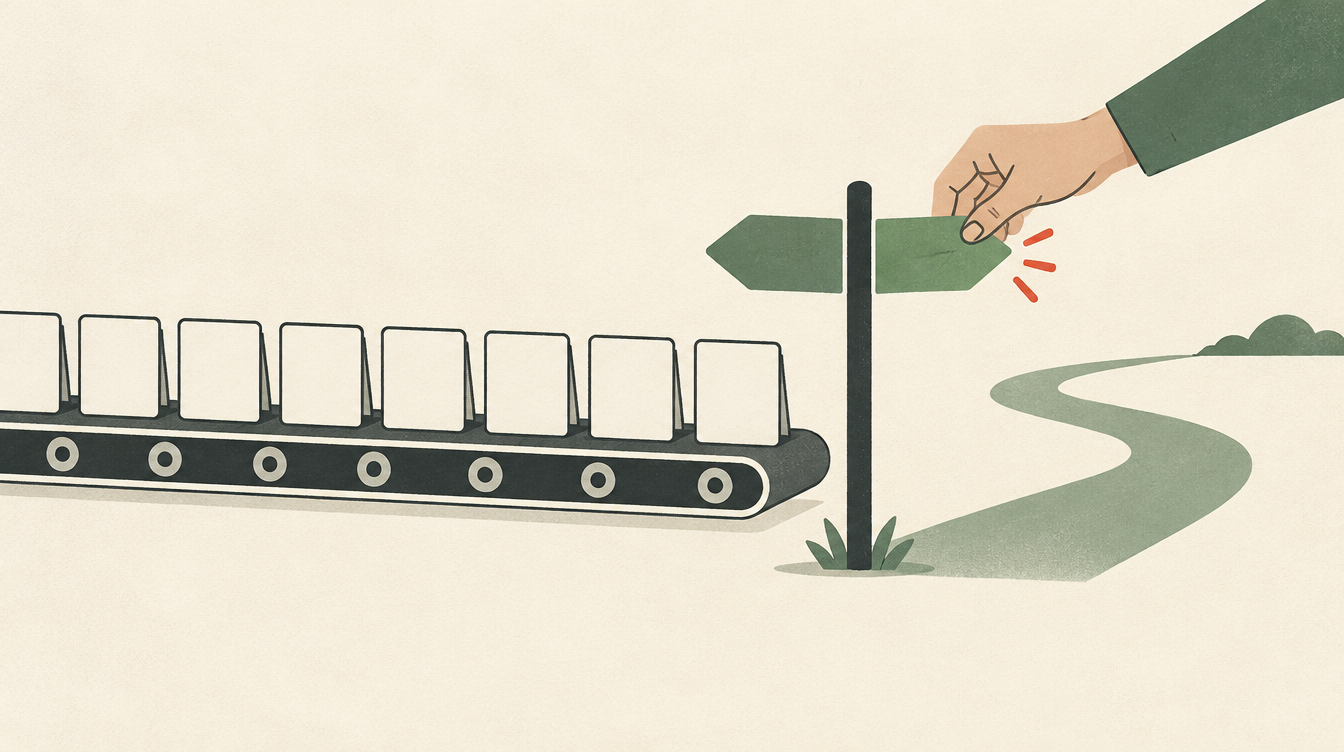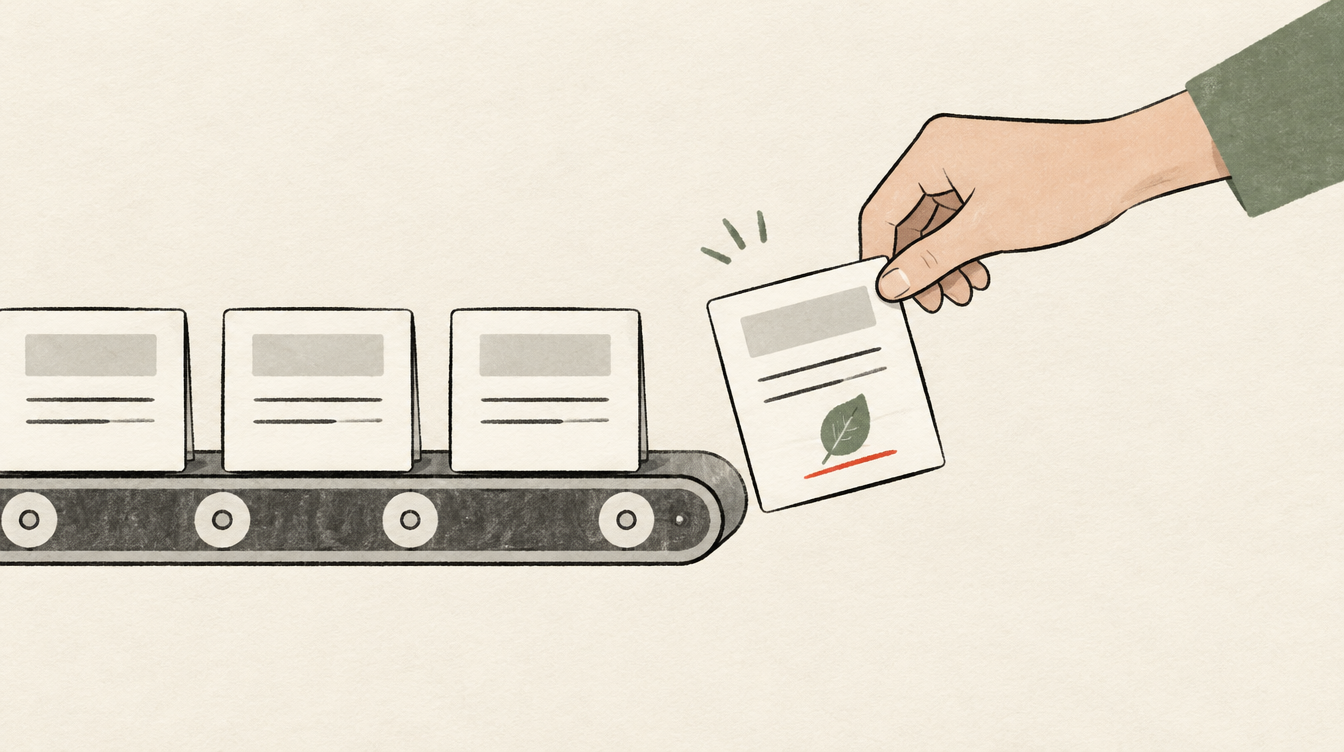

Many companies have started their AI journey in the same way: they buy access to new tools, organize training sessions, launch a few pilots, and encourage their teams to experiment.
These are useful first steps. But they are not the transformation itself.
A company can invest in powerful AI technology and still operate almost exactly as it did before. Employees may use the tools occasionally, teams may produce more content, and leadership may report growing adoption. Yet the underlying processes remain slow, decisions remain difficult, and customers see little meaningful improvement.
The problem is not always the technology.
Buying access to AI is a decision. Changing how a business works is a transformation.
A Better Tool Cannot Automatically Fix a Broken Workflow
Imagine a customer service team that receives an AI assistant to help agents answer questions faster.
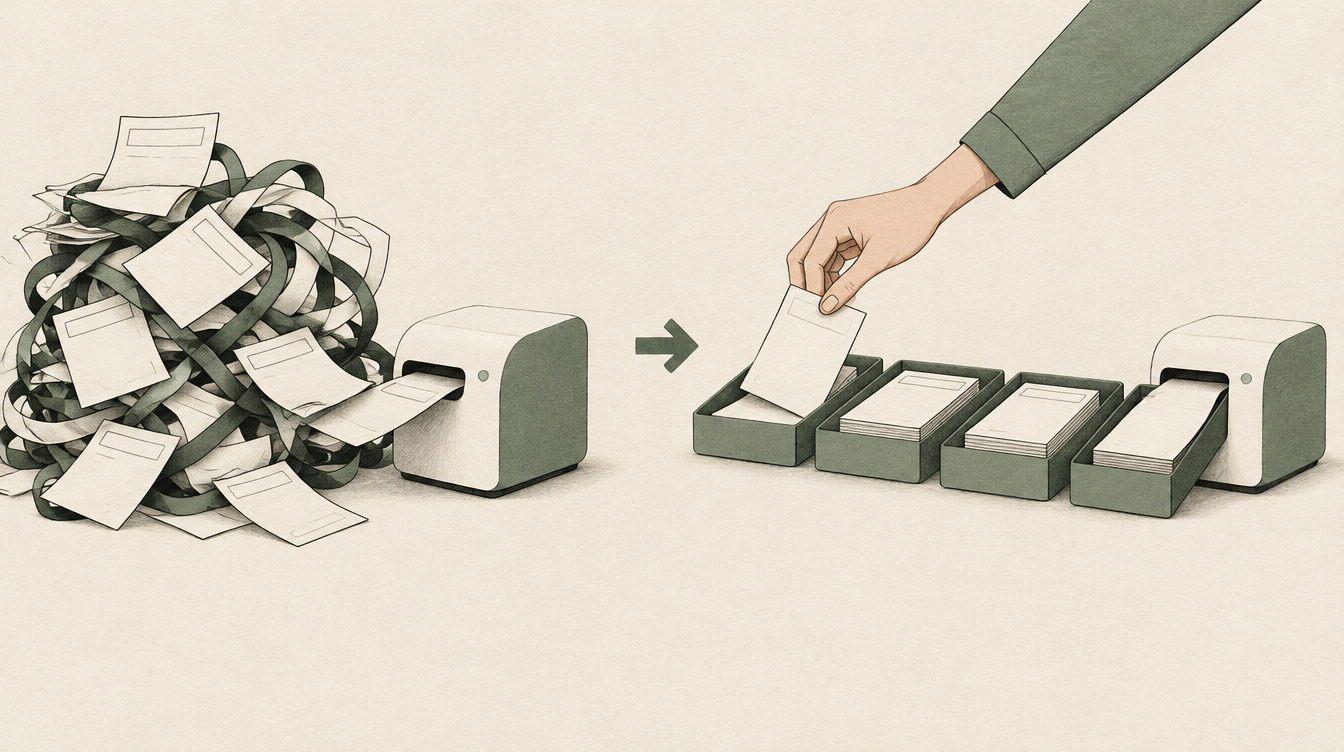
The assistant can generate responses, summarize conversations, and retrieve information. But the internal knowledge base is outdated, customer information is scattered across systems, and agents still have to repeat the same steps to complete a request.
The new tool may save a few minutes here and there. It may even create another screen to manage.
The company has added AI to the workflow without redesigning the workflow itself.
A better approach begins with the work, not the tool. Where does the process slow down? Which decisions require unnecessary effort? What information is difficult to find? Which steps create friction for employees or customers?
Once those questions are answered, AI can be introduced where it removes a genuine obstacle—not simply where it is technically possible to use it.
The goal is not to add AI to every process. It is to improve the processes that matter.
Training People Is Not the Same as Helping Them Change
Many AI adoption plans focus heavily on training. Employees learn how to write prompts, explore features, and generate useful outputs.
That knowledge matters, but it is only one part of adoption.
People also need to understand when the tools should be used, how the results fit into their responsibilities, and what happens when the system gets something wrong.
They may worry about the quality of AI-generated work, the risk of sharing sensitive information, or whether using the technology will eventually make their roles less valuable. In some organizations, they may be encouraged to experiment while still being evaluated against processes that reward the old way of working.
These are not simply training gaps. They are questions of trust, incentives, accountability, and leadership.
Employees are more likely to adopt a tool when they can see how it helps them do meaningful work better—and when the organization has made its expectations clear.
That means defining where AI can act independently, where human review is required, who owns the final decision, and what information must remain protected.
Adoption becomes easier when people understand both the opportunity and the boundaries.
Measure the Improvement, Not the Activity
It is tempting to measure AI adoption through the number of users, prompts, generated articles, or completed experiments.
These figures can help show whether a tool is being used. They cannot, on their own, demonstrate whether the business is becoming better.
More generated content does not necessarily mean better marketing. More automated responses do not necessarily mean better customer service. More AI-assisted decisions do not automatically mean better decisions.
The meaningful measures depend on the work being improved.
For a customer service team, that might mean faster resolution without a decline in quality. For marketing, it might mean stronger campaign performance, more relevant customer experiences, or less time spent on repetitive production. For internal operations, it might mean fewer handoffs, lower error rates, or faster access to reliable information.
The important question is not simply, How much AI are we using?
It is, What is measurably better because we use it?
Without that connection, adoption risks becoming a performance report about technology rather than evidence of business progress.
Start With the Work, Then Choose the Technology
A more effective adoption process begins with a specific business problem.
First, identify a process where time, quality, cost, or customer experience can meaningfully improve. Then understand how the work is done today, including the information people need, the decisions they make, and the points where delays or errors occur.
Next, define the role AI should play. Should it retrieve information, prepare a first draft, identify patterns, recommend an action, or complete a well-defined task? Decide where human judgment remains essential and how employees can review, correct, and improve the results.
Start with a focused use case, measure the outcome, collect feedback, and adjust the workflow before expanding it.
This approach may look less exciting than announcing a company-wide AI initiative. But it creates something more valuable: a clear connection between technology investment and business improvement.
It also gives teams a practical way to learn. Successful adoption is rarely the result of one launch. It grows through repeated cycles of testing, learning, and improving the way work gets done.
The Responsibility Sits With Leadership
AI adoption cannot be delegated entirely to the IT department, just as improving customer experience cannot be solved by purchasing a new customer service platform.
Technology teams have a critical role in security, integration, infrastructure, and technical enablement. But business leaders must decide which problems deserve attention, what success looks like, how responsibilities change, and which risks the organization is prepared to accept.
They must also make space for teams to question existing processes rather than simply automate them.
Sometimes the right answer is to introduce AI. Sometimes it is to simplify a process first. Sometimes the most valuable decision is to leave a human firmly in control.
The quality of adoption depends on making those distinctions deliberately.
The Real Transformation
AI transformation does not happen when every employee receives an account or when every department launches a pilot.
It happens when the organization becomes better at learning, deciding, and delivering value because of how it uses the technology.
That requires more than new software. It requires clear priorities, redesigned workflows, trusted information, capable people, sensible governance, and leaders who take responsibility for the change.
The companies that benefit most from AI will not necessarily be the ones that adopt the most tools. They will be the ones that rethink the work those tools are meant to improve.