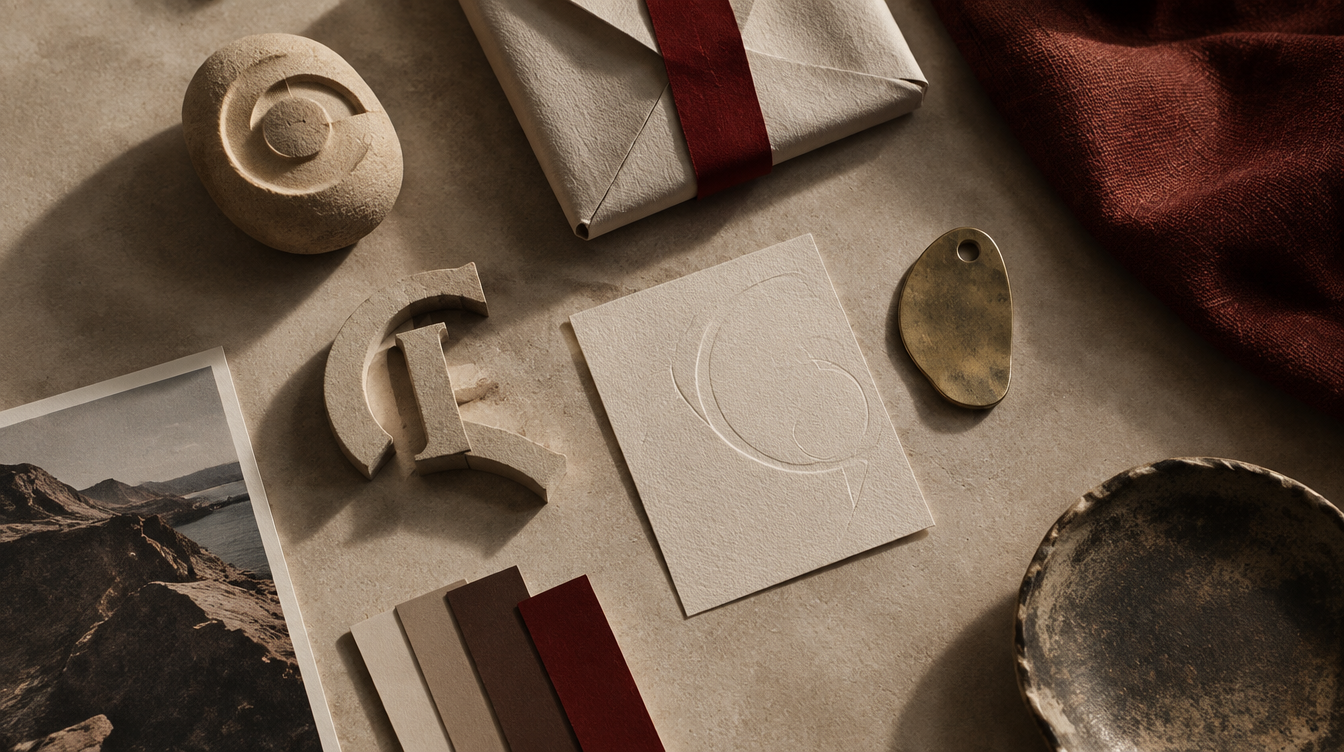

There is something comforting about a logo.
It is visible.
It is controllable.
It can be placed on a website, a product, a building, a presentation, a business card.
You can change it, approve it, measure how it looks and put it into a brand guideline.
That makes it tempting to believe that the logo is where the brand lives.
It isn't.
A logo is one of the most visible expressions of a brand.
It is not the brand itself.
A logo helps people recognize you
The first job of a logo is relatively simple:
Help people recognize something.
Over time, repeated exposure can create familiarity.
People begin to recognize the shape, the symbol, the wordmark or the combination of elements.
That matters.
Recognition creates memory.
But recognition is not meaning.
You can recognize a brand without trusting it.
You can recognize a company without liking it.
You can recognize a product without wanting it.
The logo tells people:
“This is us.”
It doesn't automatically tell them:
“This is what we mean to you.”
That part has to be earned.
The logo borrows meaning from everything around it
Think about a familiar logo.
Remove the product.
Remove the experience.
Remove the advertising.
Remove the people.
Remove the reputation.
What is left?
A shape.
Maybe a color.
Maybe a word.
The meaning we attach to the logo comes from everything we have experienced around it.
This is why the same visual identity can feel completely different when applied to two different businesses.
The symbol doesn't carry all the meaning.
The business does.
The logo gradually becomes a container for that meaning.
This is why rebranding is often misunderstood
A company changes its logo.
The new identity looks cleaner.
The colors feel more modern.
The typography is better.
Everyone feels like something has happened.
But sometimes almost nothing has changed.
The customer experience is the same.
The product is the same.
The positioning is unclear.
The service is inconsistent.
The business behaves exactly as it did before.
Only the wrapper changed.
A new logo can create a new first impression.
It cannot create a new reputation overnight.
That takes time.
And more importantly, it takes behavior.
Identity is bigger than the logo
A strong identity is a system.
It includes the visual language, but it also includes how the brand behaves and communicates.
The typography.
The photography.
The colors.
The tone of voice.
The language.
The way information is presented.
The way people are treated.
The details of the product.
The experience of buying.
The experience of complaining.
The experience after the sale.
These things may not look like branding when viewed individually.
Together, they create a pattern.
And people are very good at recognizing patterns.
The strongest brands are recognizable without showing the logo
This is an interesting test.
Remove the logo.
Can people still tell what brand they are looking at?
Maybe from the photography.
Maybe from the typography.
Maybe from the color.
Maybe from the packaging.
Maybe from the tone.
Maybe from the way the product is presented.
Maybe simply from the feeling of the whole thing.
That is when identity becomes powerful.
The brand doesn't need to announce itself every time.
Its character has become recognizable.
The logo becomes almost unnecessary for recognition.
That is not because the logo is unimportant.
It is because the rest of the system has become strong enough to carry the identity.

A brand is experienced, not displayed
This is probably the simplest way to think about it.
You display a logo.
You experience a brand.
You see the logo.
You deal with the company.
You see the colors.
You use the product.
You read the tagline.
You call customer service.
You see the campaign.
You wait for a problem to be solved.
Every interaction adds another piece to the picture.
Over time, those pieces become an impression.
That impression becomes a reputation.
And reputation is much harder to redesign than a logo.
So what should a logo actually do?
A good logo should identify.
It should be appropriate to the brand.
It should work across contexts.
It should be distinctive enough to be remembered.
It should have the flexibility to live within a larger identity system.
But we should stop asking the logo to do the job of the entire brand.
If the product is weak, the logo cannot rescue it.
If the service is frustrating, the logo cannot compensate.
If the positioning is unclear, the logo cannot explain it.
If the company does not keep its promises, the logo cannot create trust.
The logo is the signature.
The brand is everything that makes the signature mean something.
And the more meaningful the brand becomes, the less it needs to explain itself.